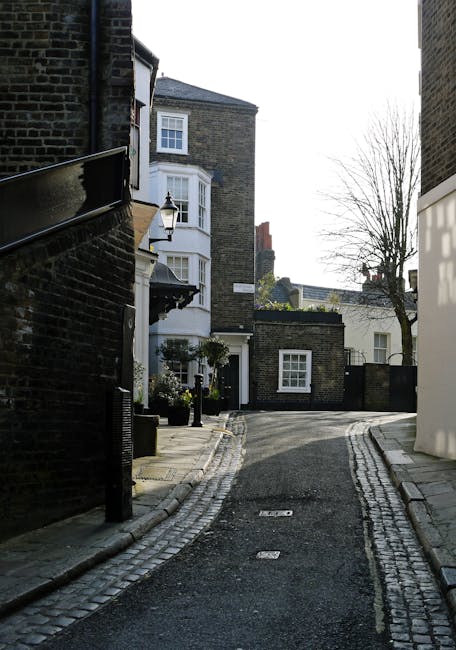
Avoid hidden charges in Hampstead removals quotes: a practical guide to clearer moving costs
Getting a removals quote should feel straightforward. In reality, plenty of people in Hampstead discover that the number they were shown first is not the number they end up paying. That gap is usually where stress starts. If you want to avoid hidden charges in Hampstead removals quotes, you need to know what to ask, what to check, and which parts of a quote are easy to miss when everyone is in a rush.
This guide breaks the process down in plain English. We will look at the common charge traps, how legitimate movers structure pricing, what to compare line by line, and how to spot vague wording before it becomes an unpleasant surprise on moving day. You will also find a checklist, a comparison table, and a few practical examples from the sort of situations people actually face in London flats, family homes, and busy office moves. Simple, really - once you know where to look.
Why hidden charges matter
Hidden charges are not just annoying. They can change your entire moving budget. A quote that looks competitive at first glance may become expensive once extras are added for stairs, long carries, parking issues, waiting time, packing materials, dismantling, or access problems. In a place like Hampstead, where homes range from compact conversions to larger period properties with awkward access, those details matter more than people expect.
The real problem is not simply the price itself. It is uncertainty. When a mover gives you a vague estimate, you cannot tell whether the final figure will be fair or inflated. That makes it harder to compare pricing and quotes properly and harder to budget for the rest of the move, from cleaning to temporary storage.
There is also the emotional side. Moving day is already full of small pressures - keys, lift access, neighbours, boxes you forgot to label, that one shelf you meant to dismantle yesterday. The last thing you need is a surprise charge being read out at the door. To be fair, sometimes extra work does cost extra. The key is that it should be explained clearly before anyone loads a van.
If you understand the structure of the quote, you can protect yourself without becoming suspicious of every mover. That balance is the goal: clarity, not conflict.
How removals quotes usually work
Most removals quotes are built from a combination of time, labour, vehicle use, distance, and job complexity. Some companies charge a fixed rate for a clearly defined move. Others use hourly pricing, which can suit smaller jobs but needs careful explanation so you know what the clock includes. A good quote should say exactly what is covered and what is not.
There are several common pricing models:
- Fixed price: A set total for an agreed job description. Best when the inventory and access details are clear.
- Hourly rate: You pay for time on the job. Useful for short or flexible moves, but only if start and end points are defined properly.
- Hybrid pricing: Some firms combine a base fee with extras for special items or difficult access.
The hidden-charge issue usually appears when the mover's assumptions are not written down. For example, they may assume you have a lift, wide stairwell, and ready-packed boxes, while you assumed everything was included. That gap is where disappointment tends to creep in.
A trustworthy quote process should ask about:
- the number of rooms or volume of items
- parking restrictions and distance from the property to the vehicle
- floors, lifts, or narrow staircases
- fragile or specialist items such as pianos
- packing, dismantling, wrapping, and reassembly
- storage needs if there is a gap between moving out and moving in
- timing, including weekends, evenings, or same-day requests
For larger domestic moves, it can help to review a mover's broader home moves information or compare the structure of house removals against a smaller man and van arrangement. Different services naturally suit different budgets, but only if the scope is clear.
Key benefits and practical advantages
Knowing how to avoid hidden charges is not just about saving money. It also makes the whole move calmer and more predictable. You get fewer awkward conversations, fewer last-minute add-ons, and a much better sense of whether a quote is realistic.
Here are the biggest practical benefits:
- Cleaner budgeting: You can set aside the right amount for the move itself and avoid overspending elsewhere.
- Better comparisons: Like-for-like quotes are easier to compare when all the basics are listed.
- Fewer delays: When access, packing, and parking are already discussed, moving day tends to run more smoothly.
- Lower stress: No one likes haggling while standing in a hallway at 8 a.m.
- Stronger trust: A mover who explains costs clearly is usually easier to work with throughout the move.
There is another advantage people often overlook. Clear quoting helps you choose the right service level. You may find that a slightly higher quote from a company offering packing support, proper insurance, or better handling of awkward items actually works out cheaper overall than a bare-bones price with lots of extras later. Truth be told, the cheapest first number is not always the cheapest final bill.
If you are moving delicate or specialist items, such as a piano, taking time to understand the service scope can make a real difference. In those cases, checking pages like piano removals or packing and unpacking services can help you see what a fuller service may include.
Who this is for and when it makes sense
This advice matters to almost anyone arranging a move in Hampstead, but it is especially useful in a few situations. If your move is straightforward, with easy parking and a short distance between the property and the van, hidden charges may be easier to avoid. If your move is more complicated, careful quote checking becomes essential.
You will benefit most from a detailed quote if you are:
- moving from or to a flat with stairs or limited lift access
- dealing with controlled parking or difficult street access
- moving on a tight timetable
- relocating a family home with more furniture and packing needs
- moving an office where timing and equipment handling matter
- transporting large, fragile, or unusually heavy items
- using storage as part of the move
Students often need especially clear pricing because budgets are tight and move dates can shift quickly. If that sounds familiar, you may find student removals more relevant than a full house-move package. Likewise, if you only need help with a smaller job, a focused man with a van arrangement may make sense - provided the quote explains exactly what is included.
Office moves are another place where hidden extras can sneak in. Extra floors, IT equipment, filing systems, after-hours access, and building rules can all affect the final figure. If you are relocating a workspace, look closely at office removals or commercial moves so you can match the service to the job.
Step-by-step guidance
Here is a practical way to reduce the risk of hidden charges. Nothing fancy. Just a sensible process that works.
- Write down everything you need moved. Include the obvious furniture, but also lamps, mirrors, bedding, box counts, garden items, and anything awkwardly shaped.
- Be honest about access. Mention narrow stairs, no lift, long walk from the street, or shared entrances. Guessing here usually costs more later.
- Ask what the price includes. Does it cover loading, unloading, fuel, travel time, dismantling, reassembly, blankets, straps, and protective wrapping?
- Check waiting-time rules. If the keys are delayed, does the clock keep running? How is that charged?
- Confirm parking and congestion assumptions. If parking permits or extra carrying distance are needed, ask whether those are included or charged separately.
- Request clarity on minimum charges. Some jobs are priced with a minimum time or minimum call-out fee. That is not necessarily bad, but it should be plain.
- Get the quote in writing. A phone estimate is useful only if it is followed by a written breakdown. Keep it simple and saved somewhere you can find it.
- Ask about packing materials and labour. Boxes, tape, mattress covers, wardrobe cartons, and wrapping can all change the total.
- Check whether insurance or special handling affects the job. This matters for high-value or fragile items. It should be discussed, not assumed.
- Read the terms and conditions. Not everyone enjoys this part, admittedly, but it is where the small print tends to live.
A useful habit is to send the same list of details to every mover you approach. That way, the quotes you receive are more genuinely comparable. If one company asks more questions than another, that is often a good sign, not an annoying one. They are trying to reduce guesswork.
For storage-related moves, ask whether collection, delivery, and short-term storage are priced separately. You can review storage options if your moving dates do not line up neatly. That sort of overlap is exactly where hidden extras can appear if nobody spells it out.
Expert tips for better results
After enough move planning, a few patterns start to show. The firms that quote most clearly tend to ask the best questions early. The customer who gives the clearest inventory usually gets the cleanest price. Fairly obvious, but still worth saying.
- Ask for a breakdown, not just a total. A single number can look neat, but a breakdown shows where the money goes.
- Use photos if the mover allows them. Pictures of staircases, parking access, and bulky items can reduce misunderstanding.
- Flag anything unusual early. A cast-iron table, a grand piano, a glass cabinet, or large office printers can affect the quote.
- Clarify whether disassembly is included. Beds and wardrobes are common trouble spots.
- Ask what happens if the move runs long. Understand the hourly rate or overtime logic before the day arrives.
One small but important tip: keep all quote communication in one place. Email is fine. Screenshots are fine. A messy mix of texts, voice notes, and half-remembered calls is where misunderstandings breed. Not ideal.
If you are comparing different vehicle sizes or service types, it may help to look at removal van, moving truck, and removal truck hire pages to understand what is suited to a smaller versus larger move. The vehicle matters, but only as part of the overall service picture.
Common mistakes to avoid
Most hidden-charge problems come from a handful of avoidable mistakes. None of them are dramatic, but together they can turn a sensible quote into an expensive one.
- Choosing only on price. The lowest number can be missing essentials.
- Assuming stairs are included. Many movers price access carefully, and some charge extra for higher floors or long carries.
- Forgetting parking or permits. In Hampstead, parking can be a real issue. If it is difficult, say so clearly.
- Not mentioning bulky items. That antique sideboard or exercise bike can matter more than a stack of small boxes.
- Leaving packing until the last minute. If the movers are waiting while boxes are sealed, the job can run longer than planned.
- Skipping the written confirmation. Verbal agreements are easy to misunderstand when you are busy.
- Ignoring the terms on cancellation or rescheduling. Plans change. The cost of changing them should be clear.
There is also a tendency to think that all quotes are designed the same way. They are not. Some are very thorough. Some are deliberately light on detail because the business wants to look cheaper. Spotting the difference is half the battle.
If you are dealing with old furniture that may need to be taken away separately, you might also want to look at furniture removals or furniture pick up so you understand whether disposal, collection, or transport is being quoted for.
Tools, resources and recommendations
You do not need specialist software to avoid hidden charges, just a good process. A simple spreadsheet, notes app, or even a paper checklist can work surprisingly well. What matters is consistency.
Useful things to prepare before asking for quotes:
- a room-by-room inventory
- photos of awkward access points
- rough dimensions of any oversized items
- your moving date range and time window
- parking notes for both addresses
- the floor level at each property
- whether packing, unpacking, storage, or dismantling is needed
It also helps to know what kind of removal support you actually need. Some people want full-service help. Others only need transport. A move with removals support might suit one household, while a lighter man with van arrangement fits another. Neither is automatically better. The best option is the one that matches the job and the quote is written clearly enough that you can see the fit.
For businesses, the same principle applies. If you need less disruption and more coordination, office relocation services may be a better match than a basic vehicle hire. And if timing is extremely tight, same day removals should be discussed in detail because urgency can change the cost structure quite a bit.
Law, compliance, standards and best practice
There is no single magic rule that forces every removals company to quote the same way. What matters in practice is transparency, fairness, and accurate description of the service. In the UK, consumer protection expectations generally mean that prices should not be presented in a misleading way. Beyond that, reputable movers should make their terms easy to understand and should not spring major extras on customers without prior explanation.
Best practice usually includes:
- clear written estimates or quotations
- plain language around what is included and excluded
- fair notice of extras such as waiting time or special handling
- appropriate insurance arrangements for the work being done
- safe handling procedures for items, property, and staff
It is also sensible to look at a company's own policies. Pages such as terms and conditions, insurance and safety, and health and safety policy help you see how seriously they treat the practical side of the move. If payments are involved online or by card, payment and security is another reassuring page to review.
For customers who want to understand the company background before booking, about us is useful for general trust-building. And if something does go wrong, a visible complaints procedure can tell you there is a proper route for resolving issues rather than a shrug and a voicemail message. That matters more than people think.
Options and comparison table
Here is a simple comparison to help you judge which type of quote may be the safest fit for your move. The goal is not to crown a winner; it is to make the differences visible.
| Quote style | Best for | Risk of hidden charges | What to check carefully |
|---|---|---|---|
| Fixed price | Moves with a clear inventory and stable access details | Lower, if scope is written clearly | Exclusions, access assumptions, special-item fees |
| Hourly rate | Smaller or flexible moves | Medium, because time can grow quickly | Minimum hours, waiting time, travel time, overtime rules |
| Base fee plus extras | Moves with some known complexity | Medium to higher if extras are vague | Which extras are fixed, which are estimates, and how they are measured |
| Full-service package | Busy households, larger homes, office moves, or time-sensitive jobs | Lower when the package is detailed | Packing, dismantling, furniture protection, storage, and insurance coverage |
If you ask me, the safest option is usually the one that gives you enough detail to feel boring. Boring quotes are good. Boring quotes rarely surprise you later.
Case study or real-world example
Imagine a small flat move in Hampstead. At first glance, it looks simple: a sofa, a bed, three chests, a few boxes, and one awkward mirror. The first mover gives a quick estimate over the phone. It sounds affordable. But the customer later learns that the quote did not include the third-floor walk-up, the narrow stairwell, or the fact that parking outside the building is limited and may require a longer carry.
Another mover asks more questions. They want photos, confirm the floor level, check whether the bed needs dismantling, and ask how many boxes are packed already. The price is slightly higher. Still, it is clearer. The customer can see why. On moving day, there is no argument about stairs or waiting time because those were discussed from the start.
That second quote often feels better even before the van arrives. There is less guessing. Less friction. And, in real life, that often means the final bill is closer to the original estimate.
I have seen this same pattern with family houses, student moves, and office jobs. When the quote is properly scoped, the move tends to feel calmer - even if the day is noisy, wet, or slightly chaotic, which London sometimes insists on being.
Practical checklist
Use this before you confirm any removals booking:
- Have I described every item that needs moving?
- Have I explained access at both addresses?
- Do I know whether stairs, lifts, or long carries affect the price?
- Have I asked what happens if the job takes longer than expected?
- Do I know whether packing materials are included?
- Is dismantling and reassembly included if I need it?
- Have I confirmed parking assumptions and permit needs?
- Is storage needed, and if so, is it priced separately?
- Have I asked about insurance and liability for damage or loss?
- Is the quote written down clearly enough to compare with others?
Expert summary: The easiest way to avoid hidden charges is to remove ambiguity before the move starts. Clear inventory, clear access details, clear price breakdown. That is the whole game, really.
Get a free quote today and see how much you can save.
Conclusion
Hidden charges are rarely a mystery once you know what to look for. In most cases, they come from missing details, vague assumptions, or quotes that are designed to sound low without explaining the real work involved. If you take the time to describe your move clearly, ask direct questions, and compare quotes on the same basis, you can avoid most of the common traps.
That does not mean every move will be simple. Hampstead properties can be charming, awkward, compact, elegant, old, and a bit stubborn all at once. But a clear quote turns the moving process from guesswork into a plan. And that is a big win.
For a smoother experience, choose a mover who answers questions plainly, puts the details in writing, and makes it obvious what you are paying for. That kind of clarity is worth its weight in packing tape.
Move carefully, ask more than you think you need to ask, and trust your instincts when something feels too vague. It usually is.
Frequently Asked Questions
What are hidden charges in removals quotes?
They are extra fees that were not obvious at the time of quoting. Common examples include charges for stairs, long carries, waiting time, packing materials, dismantling, or difficult parking.
How can I tell if a Hampstead removals quote is honest?
An honest quote explains what is included, what is excluded, and what might change the price. It should ask questions about access, item size, and timing instead of giving a vague total and hoping for the best.
Is a fixed-price removals quote always better than hourly pricing?
Not always. A fixed price can be easier to budget for, but only if the scope is accurate. Hourly pricing can suit smaller moves, provided you understand minimum charges and waiting-time rules.
Why do removals companies ask so many questions?
Usually because they are trying to price the job properly. The more they know about access, inventory, and timing, the less likely there is to be a surprise later. It can feel a bit detailed, but that is often a good sign.
Do I need to mention stairs if the property only has one or two?
Yes. Even a small number of stairs can affect labour time and handling. Narrow or awkward staircases can matter as much as the floor count, especially with larger furniture.
Should packing materials be included in the quote?
They can be, but not always. Ask whether boxes, tape, blankets, mattress covers, and wardrobe cartons are included or charged separately. This is one of the easiest places for costs to creep up.
What should I do if a quote looks too cheap?
Ask what is missing. A very low quote may exclude access issues, packing, travel time, or special handling. If the company cannot explain the figure clearly, compare it carefully with better-detailed alternatives.
Can storage affect the final moving cost?
Yes. Collection, storage, and redelivery are often priced separately. If your move dates do not line up, ask how storage is charged and whether the quote covers both ends of the move.
How far in advance should I ask for a removals quote?
The earlier, the better. That gives you time to compare properly, ask follow-up questions, and avoid rushing into the first available price. For busy periods, early booking also helps with availability.
Should I read the terms and conditions even for a small move?
Yes, especially for a small move. Small jobs can still carry minimum charges, cancellation rules, and timing assumptions. The terms are where those details usually live.
What if my move changes after I get the quote?
Tell the company as soon as possible. If your inventory, access, or dates change, the quote may need to be updated. That is normal enough. What matters is that the change is reflected before moving day, not after.
How do I compare two removals quotes fairly?
Use the same inventory, the same access details, and the same dates when you request both. Then compare what is included, not just the total. A fuller quote can sometimes be better value than a cheaper one with lots of extras.
What is the single best way to avoid hidden charges?
Get everything in writing, with clear assumptions listed upfront. If the mover knows the full job and you know the full price structure, the chances of a surprise drop dramatically.