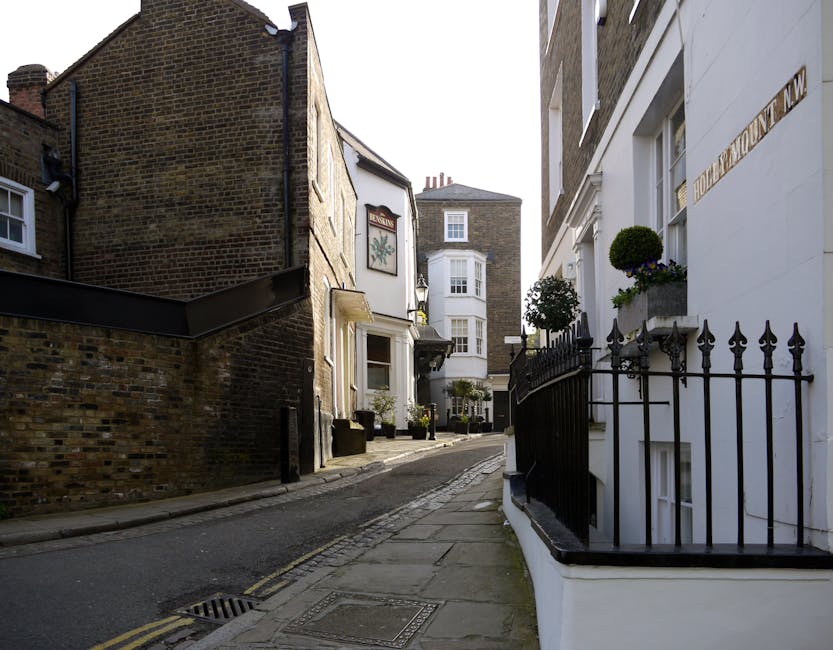
Flask Walk removals guide for narrow lanes and stairs
If you are planning a move around Flask Walk, you already know this is not a simple "park outside, load everything, and go" sort of job. Tight lanes, stair-heavy buildings, awkward corners, and limited stopping space can turn a straightforward removal into a careful bit of choreography. That is exactly why a Flask Walk removals guide for narrow lanes and stairs matters: it helps you avoid delays, reduce risk, and make smarter decisions before moving day arrives.
To be fair, a lot of people only realise how tricky access is once the van is already there and the sofa is stuck on a landing. A better approach is to plan the route, the carry, and the parking before anything heavy is lifted. This guide walks you through what to expect, how professionals handle narrow access, and what you can do to keep your move calm, safe, and efficient.
Whether you are moving a flat, a house, or a single bulky item, the practical details below will help. You will see where the real risks are, which tools make the difference, and how to spot when you may need a specialist team rather than a standard van-and-man setup.
Table of Contents
- Why Flask Walk removals guide for narrow lanes and stairs Matters
- How Flask Walk removals guide for narrow lanes and stairs Works
- Key Benefits and Practical Advantages
- Who This Is For and When It Makes Sense
- Step-by-Step Guidance
- Expert Tips for Better Results
- Common Mistakes to Avoid
- Tools, Resources and Recommendations
- Law, Compliance, Standards, or Best Practice
- Options, Methods, or Comparison Table
- Case Study or Real-World Example
- Practical Checklist
- Conclusion
- Frequently Asked Questions
Why Flask Walk removals guide for narrow lanes and stairs Matters
Narrow lanes and stairs change everything about a move. The route to the front door may be only part of the challenge; the real difficulty often starts once the van is parked and every item has to be carried by hand. In streets with tighter access, you may have to deal with one-way systems, limited loading bays, steps at the entrance, awkward terraced layouts, and neighbours who are also trying to get on with their day. That is a lot to juggle.
This is why a location-aware removals plan is so useful. It is not just about lifting furniture. It is about understanding where the carrying distance begins, whether a trolley will fit, how much protection you need for walls and bannisters, and whether the stairwell can safely take larger items. Truth be told, a poor access plan can be the difference between a move that feels controlled and one that turns into a long, sweaty, slightly miserable afternoon.
For areas like Flask Walk, the biggest risk is often the mismatch between what people expect and what the property actually allows. A property can look manageable online, then prove much tighter in person. A good removals guide helps you bridge that gap before moving day.
Expert summary: If access is tight, the most important work happens before the van arrives. Measure, map, protect, and simplify. That is the winning order.
If you are comparing service levels or deciding how much help you need, it is worth looking at broader options such as removal services, especially when the route includes stairs, restricted parking, or bulky items that need careful handling.
How Flask Walk removals guide for narrow lanes and stairs Works
At its core, this type of move works by breaking the job into manageable stages. Instead of treating the entire property as one lifting challenge, you look at the access from street to room and plan the easiest path for each item. That usually means a site check, a route check, a packing check, and then the carry itself. Simple enough on paper. In practice, it takes judgement.
A professional team will typically assess a few things first:
- how close the vehicle can legally and safely get to the property
- whether stairs are straight, turning, steep, or split by landings
- the size and weight of the bulkiest items
- the condition of floors, walls, and banisters
- how many people are needed for safe lifting
- whether items should be dismantled before the move
This is where planning stops being theoretical. A wardrobe that seems ordinary in a room can become awkward on a narrow stair turn. A sofa can be light enough for two people but still too bulky for a tight corner. And there's the fun part nobody loves: a box that was packed neatly suddenly tilts because the staircase narrows by just a few centimetres. Slightly annoying, yes, but very normal.
Good movers solve these problems by making the route work for the item, not forcing the item to work against the route. Sometimes that means using blankets, straps, sliders, or a smaller shuttle vehicle. Sometimes it means carrying one piece at a time in a very deliberate order. And sometimes it means advising the customer to remove certain items in advance so the main move goes faster.
For households moving out of compact flats, a focused service such as flat removals can be especially useful because it is already geared toward the kind of access issues you get with stairs, tight hallways, and limited entry space.
Key Benefits and Practical Advantages
The obvious benefit is that the move is easier. But the real value goes deeper than that. A well-planned move in a narrow-lane, stair-heavy location reduces stress, protects property, and helps the day run to time. That matters more than people often realise.
- Less damage risk: careful route planning reduces scuffs, chips, and knocks to paintwork, bannisters, floors, and furniture.
- Better time control: when access is mapped properly, the team spends less time improvising on the spot.
- Safer lifting: fewer awkward twists and fewer last-minute carries mean lower strain for everyone involved.
- More accurate quotes: when access is described clearly, estimates are usually more realistic.
- Less disruption to neighbours: smoother loading and unloading tends to create less noise and block less space.
- Better use of labour: the right number of movers can be scheduled from the start, instead of guessing and hoping.
There is also a psychological advantage. When the move is organised around the realities of the street and staircase, the whole day feels steadier. You are not constantly reacting. You are just following the plan.
If you need additional help with the physical side of the move, a service like man with a van can work well for lighter or more flexible moves, especially where access is tight and you want a practical, responsive setup.
Who This Is For and When It Makes Sense
This guidance is for anyone moving in or out of a property where access is not straightforward. That includes residents in terraced homes, mansion blocks, older conversions, top-floor flats, basement properties, and buildings with narrow hallways or steep staircases. If you have ever stared at a landing and thought, "How on earth is that chair getting around there?", you are in the right place.
It makes particular sense if you are:
- moving from a flat with multiple flights of stairs
- dealing with a lane where parking is limited or controlled
- moving bulky furniture, appliances, or fragile items
- working to a tight schedule and cannot afford delays
- not sure whether items should be dismantled in advance
- trying to protect a period property or newly decorated interior
Commercial clients can also benefit when office equipment, stock, or specialist furniture has to be moved through constrained access. In those cases, a service such as commercial moves may be more appropriate than a standard domestic booking, because timing, access, and handling needs can be quite different.
And if you are only moving a single bulky item rather than a full household, a focused option like furniture removals may be the smarter fit. No need to pay for a bigger setup than the job needs. Common sense, really.
Step-by-Step Guidance
Here is a practical way to plan a move with narrow lanes and stairs without losing your mind halfway through.
1. Survey the access properly
Walk the full route from street to room. Check the gate, front path, entry step, hallway width, stair turns, landing space, and the final room. Measure anything that looks tight. Do not rely on memory alone. People often do, and it usually ends in a muttered apology to the sofa.
2. Identify the largest or heaviest items first
Large wardrobes, beds, mattresses, fridges, sofas, and desks usually dictate the move. If those items can pass safely, smaller boxes are much easier to manage. If they cannot, you may need dismantling, lifting straps, or a different route.
3. Decide what must be dismantled
Bed frames, table legs, and modular furniture are often easier to move in sections. Dismantling can save time later, provided you keep screws and fittings clearly labelled. A tiny zip bag taped to the right panel can save a surprising amount of grief.
4. Protect the property before anything moves
Use floor coverings, door-frame protection, and padding on vulnerable corners. Narrow stairwells are notorious for accidental scrapes because there is very little room to recover a wobble.
5. Plan the loading order
Load the van with the items you need earliest at the destination in mind. If the route requires a shuttle run, plan it so the heaviest or most awkward items are handled when the team is fresh, not at the end of the day when everyone is feeling it in their shoulders.
6. Communicate any access restrictions in advance
Tell the removals team about parking limits, gate codes, stair counts, low ceilings, or awkward turns. The more clearly you explain the layout, the less improvisation is needed on the day.
7. Keep the final carry route clear
On moving day, move coats, shoes, mats, bins, and anything else that could cause a stumble. It sounds obvious. It still gets missed.
If your move is on a tight schedule, same-day removals can help in urgent situations, but only if access details are provided early enough for the team to prepare properly.
Expert Tips for Better Results
In our experience, the biggest wins come from small details. Not flashy ones. Small, boring, useful details.
- Use measurements, not guesses. A few centimetres can decide whether an item goes through upright, on an angle, or not at all.
- Photograph tricky access points. A staircase photo often tells a mover more than a vague description ever could.
- Keep a clear landing zone. If the top of the stairs is cluttered, the carry becomes harder and slower.
- Wrap fragile edges first. Bannisters, mirrors, and table corners take the hit in narrow spaces.
- Have a fallback plan. If the main route fails, know whether a window lift, dismantle-and-rebuild, or alternate entry is realistic.
- Label boxes by room and priority. It saves a lot of backtracking when the move involves multiple floors.
A small but important one: think about timing. Early morning loading can be calmer on some streets, while later times may be easier if nearby parking is less congested. Of course, that depends on the exact area and any local restrictions. There is no universal magic hour, annoying as that is.
For packaging and protection, a proper setup matters. If you want an easier time with fragile items or awkward stacks of boxes, packing and boxes and packing and unpacking services can take a lot of pressure off the day.
Common Mistakes to Avoid
A lot of access problems are predictable. That is the frustrating part. The good news is that once you know the usual traps, they are much easier to avoid.
- Assuming the van can park right outside. In narrow lanes, loading may need to happen from a nearby position instead.
- Ignoring stair shape. Straight stairs are one thing; winding or split staircases are another story entirely.
- Forgetting about ceiling height. Low ceilings on landings can make upright carries impossible.
- Leaving dismantling too late. If a bed frame has to come apart, do not discover that fact at the bottom of the stairs.
- Packing too heavy. Heavy boxes on stairs are awkward and risky. Better to keep them manageable.
- Not protecting walls and floors. A quick job can become an expensive repair if surfaces are left unprotected.
- Understating the amount of stuff. "Just a few items" has a funny way of becoming half the flat.
One more thing: do not let pride get in the way of a safer method. If a piece really needs two extra hands or a different angle, that is not a failure. That is just sensible moving. Nobody wins points for wrestling a wardrobe up a staircase like it is a pub challenge.
Tools, Resources and Recommendations
The right tools make narrow-lane and stair moves smoother, safer, and less noisy. You do not need every gadget under the sun, but a few items are worth having.
| Tool or Resource | What it helps with | Best used when |
|---|---|---|
| Removal blankets | Protects furniture, walls, and door frames | Any stair-heavy move with awkward corners |
| Furniture straps | Improves grip and control | Lifting bulky or slippery items |
| Trolley or sack truck | Moves boxes and lighter furniture efficiently | Where steps are limited and surfaces are even |
| Floor protectors | Prevents scuffs and dirt marks | Inside hallways, landings, and entrances |
| Labels and marker pens | Speeds unloading and room placement | When boxes are split across floors or rooms |
| Disassembly kit | Removes fittings and furniture joints | For beds, tables, wardrobes, and modular pieces |
From a service perspective, it can help to review related support such as removal van, removal truck hire, or even storage if you are moving in stages and cannot take everything in one go. Storage is especially handy when staircase access limits how much can be carried in one visit.
If you are comparing providers, also look at practical trust signals such as insurance and safety, health and safety policy, and pricing and quotes. These pages help you understand how a company works before you commit.
Law, Compliance, Standards, or Best Practice
Moves involving narrow lanes and stairs are mostly about practical safety rather than complicated legal rules, but there are still sensible standards to respect. In the UK, removal work should be carried out with proper care for workers, residents, the property, and the public. That means safe lifting, sensible parking, reasonable planning, and proper insurance where required.
If a street is tight, loading may need to be coordinated so that it does not obstruct access or create avoidable hazards. Likewise, stairways in shared buildings should be treated as common areas that need protection. This is not just etiquette. It is basic good practice.
For landlords, tenants, and homeowners alike, it also makes sense to keep communication clear. Let neighbours know if there will be temporary obstruction. Check building rules if you are in a managed block. And if there are fragile surfaces or known access issues, pass that information on early. A calm, considered move is almost always safer than a rushed one.
Companies that publish clear policies can offer extra reassurance. It is worth reviewing practical pages such as about us, terms and conditions, and complaints procedure if you want to understand how issues are handled if something does go wrong. Not glamorous, perhaps, but reassuring.
Options, Methods, or Comparison Table
Not every move through narrow lanes and stairs needs the same setup. The best method depends on the volume of items, access constraints, time available, and how much lifting is involved. Here is a practical comparison.
| Method | Best for | Pros | Watch-outs |
|---|---|---|---|
| Standard removal team | Full house or flat moves | Balanced labour and planning | May be more than needed for a very small job |
| Man and van | Smaller moves with tight access | Flexible, often quicker to arrange | May need more hands for heavy stairs |
| Disassemble-and-rebuild approach | Bulky furniture in tight stairwells | Improves fit through narrow turns | Takes extra time and care with fittings |
| Staged move with storage | Complex timings or limited access | Reduces pressure on moving day | Requires planning and an extra step |
In many real cases, the best answer is a mix of methods. For example, you might use a smaller vehicle for local loading, then carry items by hand for the final stretch, and store a few pieces until the property is ready. It is not always neat, but it works.
If the move is mostly residential, services like home moves, house removals, or man and van may all be relevant depending on scale and access. The trick is choosing the one that fits the building rather than the one that sounds most impressive.
Case Study or Real-World Example
Imagine a one-bedroom flat on an upper floor near Flask Walk. The staircase is narrow, there is a turn at the landing, and the street outside has limited room for parking. The flat includes a double bed, a sofa, a dining table, several boxes, and a narrow wardrobe that looked perfectly ordinary until it reached the stairwell. Classic.
A sensible approach would be to:
- pre-measure the wardrobe and the stairwell turn
- dismantle the bed frame in advance
- wrap the sofa arms and corners
- reserve the closest legal loading point available
- carry boxes in manageable loads rather than overfilling them
- assign one person to direct movement at the tightest turns
What usually changes the outcome is not force, but coordination. If the team knows in advance that the wardrobe needs to be rotated on the landing, they can plan the carry and protect the walls before lifting starts. If they do not know, they discover it halfway through the stairwell, and everyone gets a bit too familiar with the banister. Nobody enjoys that moment.
For larger or more delicate items, such as a piano or a particularly awkward antique cabinet, specialist handling may be required. A dedicated service like piano removals exists for good reason: some items just need more control, more care, and a better route plan.
Practical Checklist
Use this checklist before the move. It is simple, but it catches a lot of the usual mistakes.
- Measure the widest items and the tightest access points
- Check whether stairs, landings, or turns need special handling
- Confirm parking or loading arrangements
- Tell the removals team about any low ceilings or split staircases
- Decide which furniture should be dismantled
- Pack heavy items into smaller boxes
- Label boxes by room and priority
- Protect floors, walls, and bannisters
- Clear the hallway, landing, and entry path
- Keep essentials aside for the first night
- Arrange storage if all items cannot move at once
- Double-check timing and contact details the day before
Quick reminder: if your move involves multiple stair flights and a tight lane, leave extra time. It almost always takes longer than people first expect. That is not a problem; it is just the shape of the job.
Conclusion
A good Flask Walk removals guide for narrow lanes and stairs is really a guide to thinking clearly under pressure. The move itself is rarely the hardest part. The hard part is anticipating the access issues before they cause delays, damage, or unnecessary stress. Once you understand the route, the stairs, the load, and the timing, the whole day becomes much more manageable.
The best moves are usually the ones that look uneventful from the outside. A few measured steps, a careful carry, a bit of patience, and a team that knows what it is doing. Simple on paper, yes. But that simplicity comes from preparation, not luck.
If you are ready to take the next step, compare your access details, choose the right level of help, and ask for a tailored quote that reflects the real conditions on site. That one conversation can save you a lot of hassle later.
Get a free quote today and see how much you can save.
And if the staircase feels a bit impossible right now, that is fine too. With the right plan, even the awkward moves can go smoothly, one careful turn at a time.
Frequently Asked Questions
How do removals work in a narrow lane with limited parking?
Usually, the van is parked in the nearest safe and legal spot, then items are carried the remaining distance by hand or with equipment. The key is to plan that carry distance in advance so the team knows whether extra time or extra labour is needed.
What should I measure before moving through stairs?
Measure the widest furniture pieces, stair width, landing space, turn radius, and any low ceilings or protruding rails. If one item is close to the limit, take a photo as well. It helps more than people expect.
Can all furniture be moved up or down stairs?
Not always. Some items need dismantling, a different angle, or a specialist lifting method. If the item is oversized, fragile, or unusually heavy, it may be safer to treat it as a special case rather than force the issue.
Is a man and van service enough for a stair-heavy move?
Sometimes, yes. For smaller moves with a manageable number of boxes and furniture pieces, it can be ideal. If the items are bulky or the stair access is especially tight, you may need a larger team or a more specialist removals setup.
How can I protect walls and bannisters during the move?
Use blankets, padding, corner protection, and clear handling routes. The most important thing is to slow down at tight turns, where scrapes usually happen. A little patience beats a repair bill every time.
Should I dismantle furniture before the removals team arrives?
If you know a piece is awkward, dismantling it early can save time and reduce stress on the day. Beds, table legs, and modular units are common candidates. Just keep all fittings together and labelled properly.
How much extra time should I allow for narrow access?
There is no single rule, because every building is different. But it is wise to allow more time than you would for a standard curbside move, especially if stairs, turns, or parking constraints are involved. A buffer is usually worth it.
What if the sofa or wardrobe does not fit through the staircase?
First, check whether it can be dismantled. If not, the team may need to try a different angle or consider an alternative route. In some cases, a specialist move or different item handling plan is the only practical solution.
Are there compliance issues with parking or loading in tight streets?
There can be, depending on the street and local restrictions. It is sensible to check loading rules, parking limits, and building access requirements before moving day. The safest approach is to treat these as part of the move planning, not a last-minute detail.
What kind of move is best for a flat with multiple flights of stairs?
A flat removal service or a tailored man-and-van setup often works well, depending on how much you are moving. The more awkward the stair access, the more important it becomes to choose a team that has experience with similar buildings.
Can I store items if the stairs make the move too difficult in one day?
Yes. Staged moves and temporary storage are often very helpful when access is awkward or the property is not ready for everything at once. It can make the whole process feel much more manageable, especially if you are working to a deadline.
What should I tell the removals company before booking?
Give them honest details about parking, stairs, turns, lift access if any, item sizes, and anything delicate or unusually heavy. The more accurate the information, the better the quote and the smoother the move. No one benefits from guesswork.